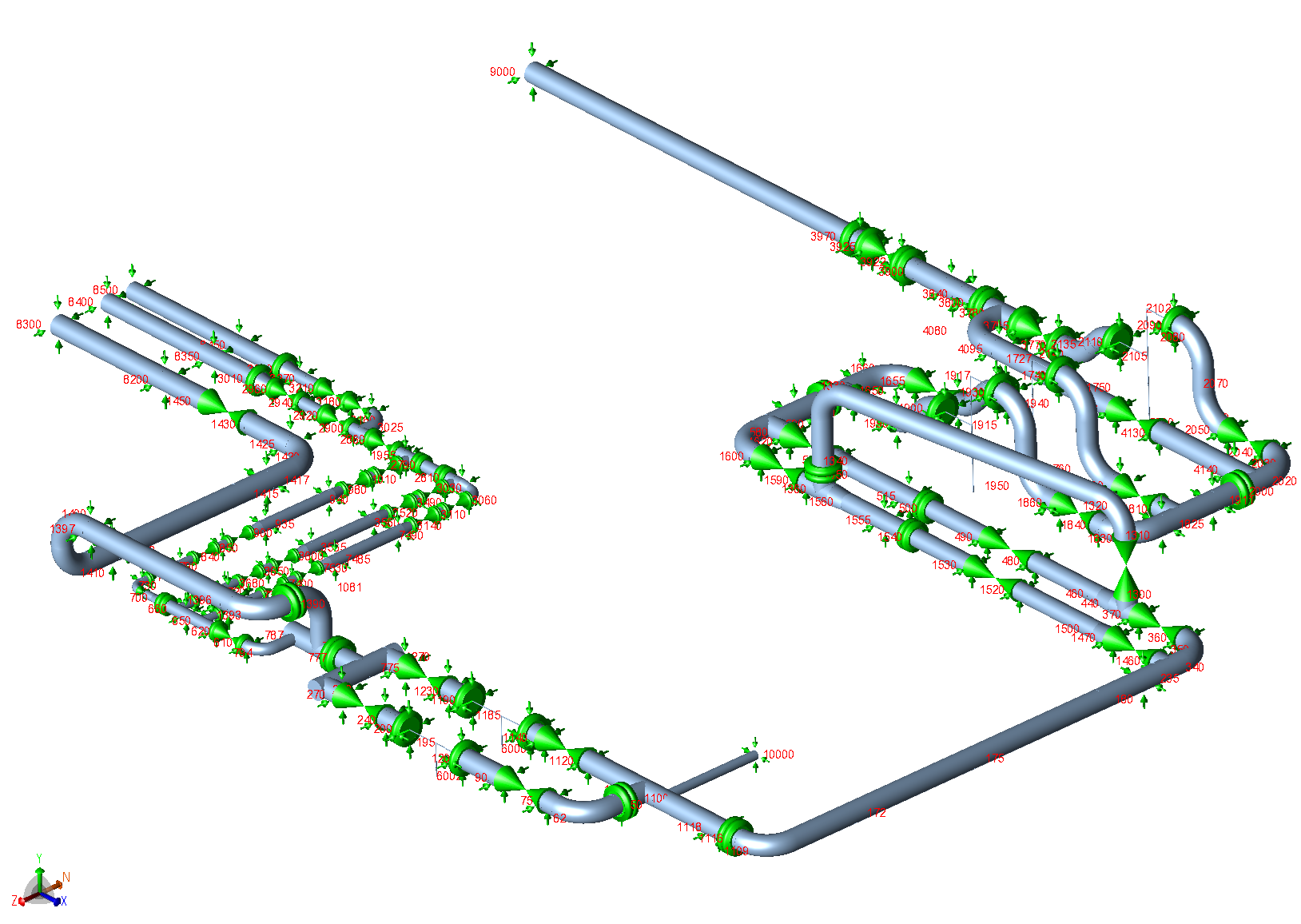

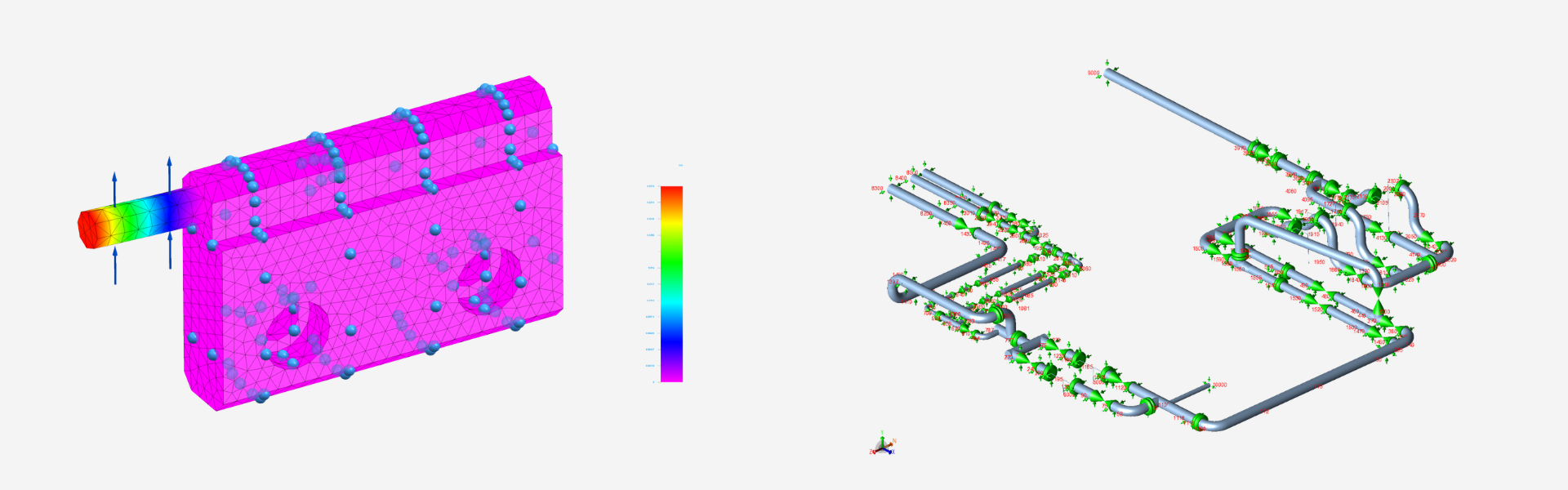

STRUCTURAL AND PIPING STRESS ANALYSIS
We develop the mathematical model of the object and subsequently process it to identify issues related to structural behavior, fluid dynamics, and complex multiphysics interactions.
From the Greek analuo (to loosen, dissolve, break down), the term literally refers to decomposition, and therefore to the understanding of a phenomenon through the breakdown of its constituent parts and elements. Applied to structures, it represents the fundamental phase in which characteristics are identified and interpreted, enabling their resolution through the governing physical laws.
Structural analysis—often used interchangeably with structural calculation—encompasses a variety of tools and techniques developed over centuries to interpret and solve problems in structural mechanics. The preliminary study phase of any analytical approach, regardless of the interpretative model adopted, involves simplifying the geometry of the structure and simulating the behavior of the materials from which it is made.
For interpreting the behavior of ancient structures, rigid‑body statics is often sufficient. By approximating materials with very low deformability as infinitely rigid (and therefore undeformable), the problem of stability can be reduced to one of equilibrium, and thus to the balance of forces acting on the body.
The equilibrium of a structure is derived from the fundamental laws of statics (cardinal equations), representing the specific condition in which both the resultant force and the resultant moment are equal to zero. This reduction of the stability problem to an equilibrium condition remains valid as long as the material’s characteristic failure thresholds are not approached (in ancient structures, stresses typically remain far below material strength limits). This approach provides a reliable estimation of the structural quantities involved and constitutes a first‑level structural assessment for marginally stable systems, which maintain equilibrium only under specific loading conditions, independently of the intrinsic strength of their constituent materials.
Static analysis of a sheet‑metal support
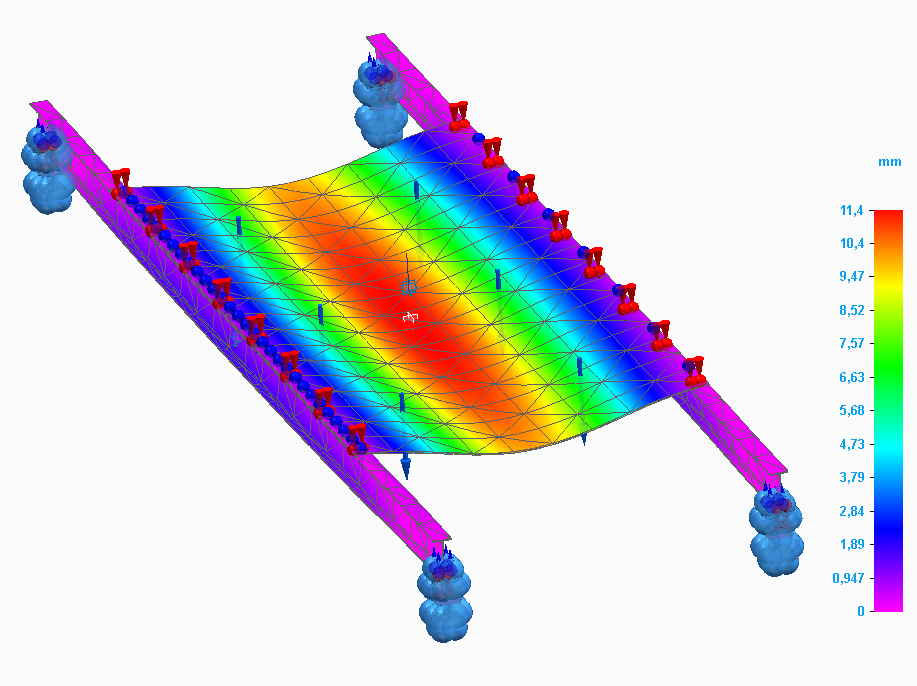
Static analysis of a sheet‑metal support
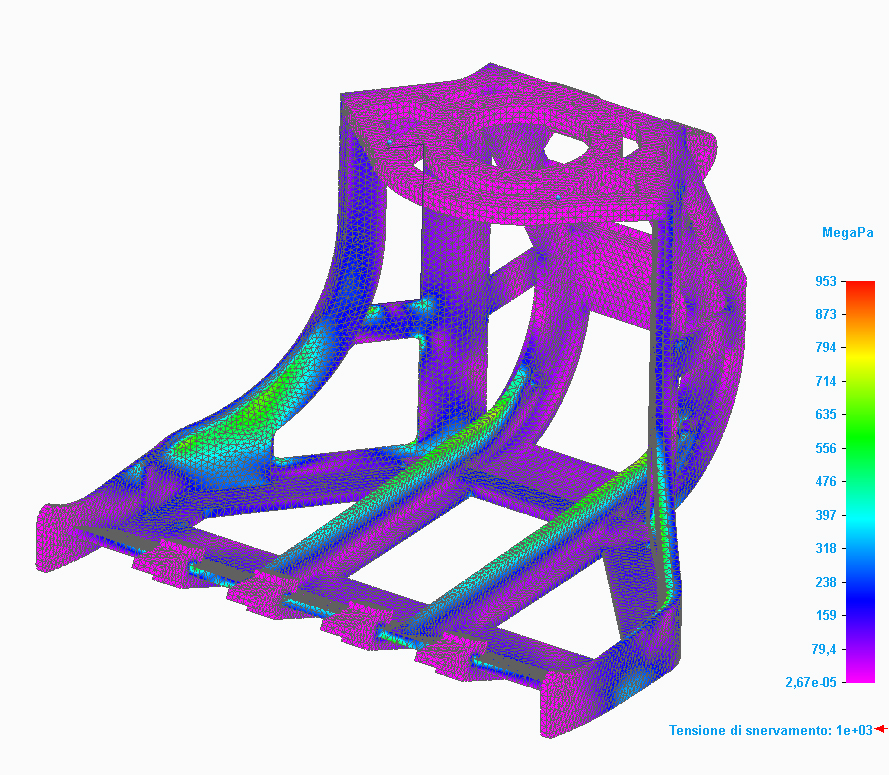
Structural calculation of an excavator bucket
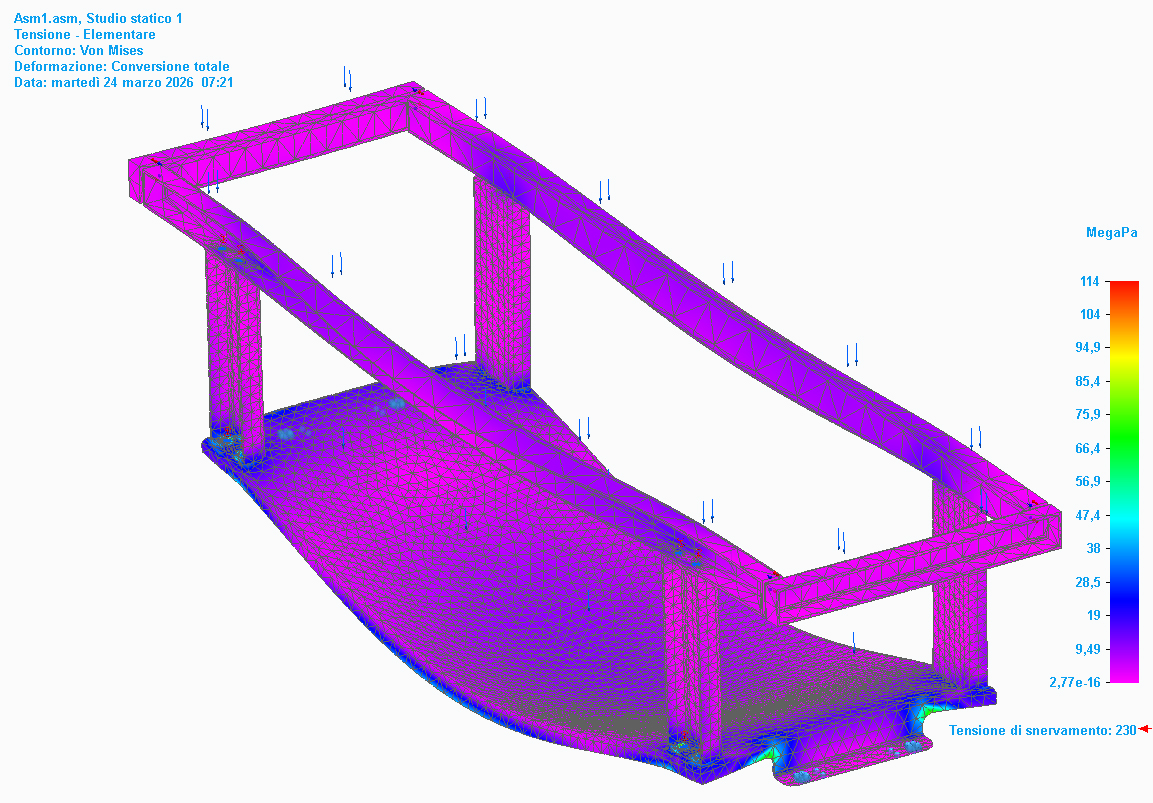
Stainless‑steel basket mounting support

Finite‑element structural analysis performed using a simulation tool to verify the strength of a pin housed within a hinge designed to support a hatch. This study enabled us to model a fully customized hinge, since commercial solutions could not meet the required specifications. Thanks to the simulation, it was possible to design a hinge with optimal performance while using more cost‑effective materials.
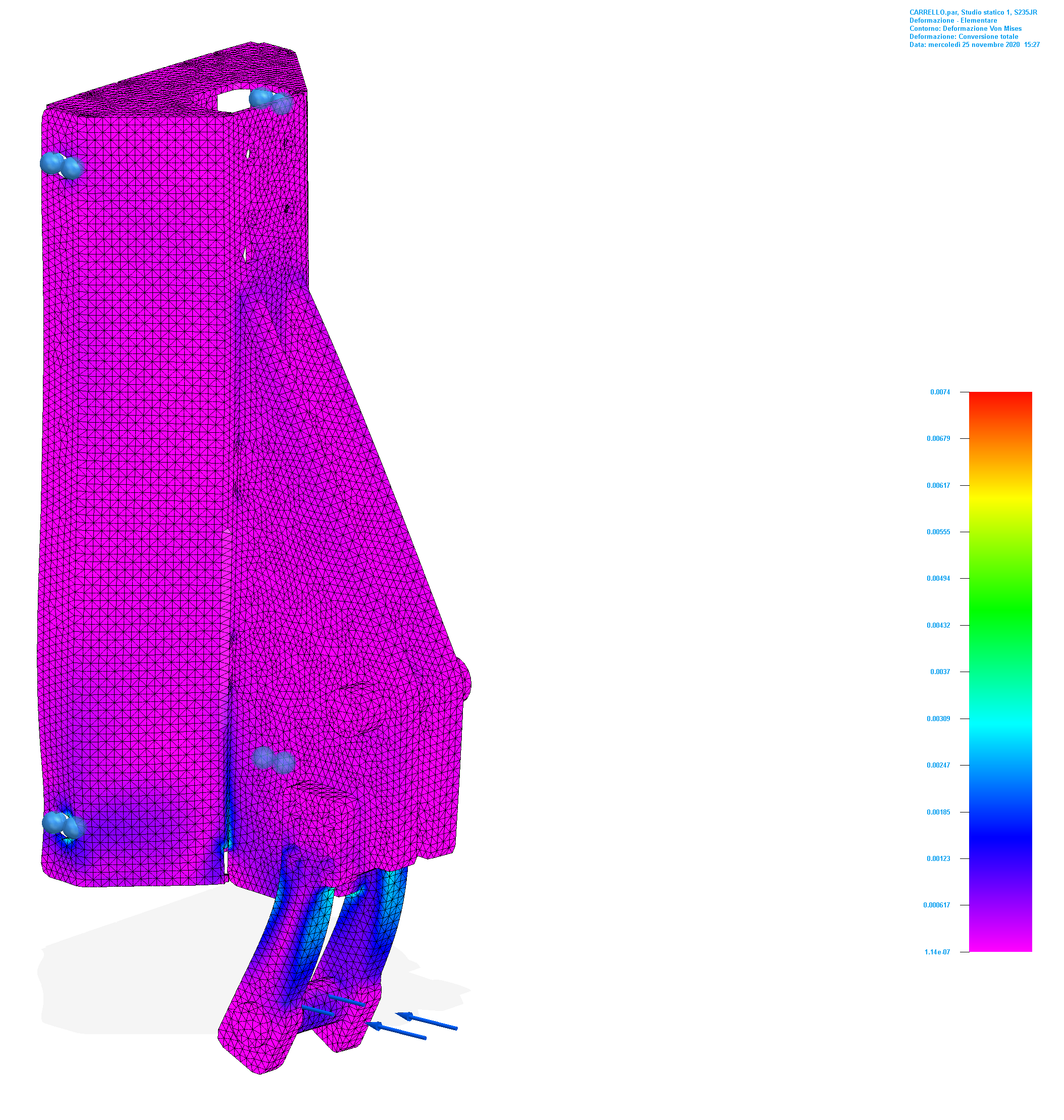
Finite‑element structural analysis to verify the load‑bearing capacity of a fork subjected to a 750‑kg load. Through load simulation and thickness optimization of the fork, we identified the optimal compromise ensuring proper machine operation.
Static analysis of a sheet‑metal support
Static analysis of a sheet‑metal support
Structural calculation of an excavator bucket
Stainless‑steel basket mounting support
Finite‑element structural analysis to verify the load‑bearing capacity of a fork subjected to a 750‑kg load. Through load simulation and thickness optimization of the fork, we identified the optimal compromise ensuring proper machine operation.
Structural and piping stress analysis